Thứ Hai, 16 tháng 4, 2012

5 things you need to know before travelling to Sapa

Sapa, Vietnam  is not only famed for its mountains sceneries but also the hamlets of colorful ethnic minorities. In 2011, Sapa has been recommended ten best tourist sites for walkers by the reputed magazine Lonely Planet. Here are some useful notes for you before a Sapa tour.  

Sapa terraced field

 Best time to go:

 The best time to visit Sapa is from April to September though; each season has its own special qualities and surprises. In this period, you may have a great opportunity to see plum flower and stunning terraced fields. It is dry with the temperature is ranging from 15 – 25 Degree Celsiu. During the winter months, the temperature is much cooler and it is advised to bring a some warm clothing. Also, during the winter months there are periods of light rain, which brings in the fog or snow. This puts Sapa in the clouds and allows for some fantastic photos. Perhaps more and more tourists travel to Sapa during the winter because of its special weather. If you want to escape from the touristy hassle, winter is not an ideal period for you.

Package Preparation:
A light suitcase is recommended during travelling to Sapa. Making sure that you have packed everything you need to make your stay more comfortable is most important. Bring a small bag with the clothes change of clothes. You should bring something warm, as the nights will cool off, sometimes dropping as much as ten degrees. Other things you might want to bring with you are a mirror, toilet paper, your favorite tea or snack, flashlight and raincoat. 

Train to Sapa


Transportation:
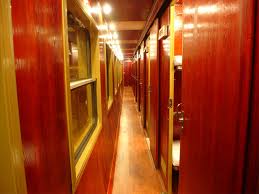
It takes around 8 hours from Hanoi to Lao Cai. You may choose two ways: travelling by coach or train to Lao Cai then, take a bus to Sapa. It depends on your budget to choose the suitable way for you. By coach, the price is around US15.  It is ranging from US$ 20 to US$ 30 for a soft berth on a night train SP. There is also available cheap price on LC train but it is quite slower.

Attractions:
Most of Sapa attractions are not far from Sapa Center. You should prepare a small map of destinations in there such as Hamrong Mountain, Ta Van village, Taphin village, Bac Ha market. You can eventually travel by yourself but I recommend you book a Sapa tour by a good travel agent who will trek with you to visit minority villages. Staying overnight at home stay with Hmong or Dao people will be a valued experience for anyone who first travels to Sapa.  People here always warm welcome their guests. If you are a kind of adventure traveler, why do not choose a package tour to conquer of Fansipan Mountain which is considered as the roof of Indochina.   

At Bac Ha market

Cuisine:
Exotic food in Sapa is known as San Lung alcohol, wild life pork, stream fish and some special vegetables such as chayote, cauliflower. Although they can find these vegetables in other province of Vietnam but only Sapa serve you the best dishes with reasonable price.  It is very exciting for walking with your partner in a romantic Sapa night and enjoy special food.       

Thứ Năm, 12 tháng 4, 2012

Exciting Bunpimay festival in Laos

 In every April, Lao people usually happily hold Bunpimay festival. It is also one of the most interesting festivals which attract many tourists.
Bunpimay festival in Laos

 Bunpimay or tet te nuoc (Splashing water festival) is one of special characters of Asian Culture. It is called by different names in different countries, Songkran (Thailand), Chol Chnam Thmey (Cambodia). However, each of them has different activities which have origins from religion. At the beginning of the year, they splash water each other with hoping to have as much as luck and happiness in New Year.

Festival in Laos call Bun. Bun, that is blessed, as Bun is doing good means to be blessed. Bunpimay is usually hold from 13th to 15th of April yearly calendar. Following this, the festival is organized in three days. The first day is also New Year Ever. They clean their house, prepare fragant water and flowers for decorating their houses. On that afternoon, they gather at pagodas to hear Monk’s lecture and pray Buddhism for best wishes for the next year. Then they proceed to wash Buddism statues. They also wash their face by this water then splash this water into their clothes, houses for fortune. At the end of the ceremony, they will release animals such as turtle, fish, crab for wishing peace in the next year.

 Visiting Laos's houses in this occasion, the guest's house will tie a blue or red threat into your wrist which symbolizes for happiness and health. In Laotian's mind, more threads you receive, more happiness and wealthy you have. Then you will be invited for traditional food here. Sticky rice and “Lap” are traditional food of Laos people on Bunpimay festival. "Lap" is like a salad dish with meat and Thai Lao herbs tossed together.

It is appears that the most exciting activities are held on the last day. Before splashing water each other, they give each other the best wishes. Not only do they make wet their body but also they pour water into their houses, furniture and animals. Laotians think that it helps them to remove bad things and diseases in New Year. Therefore, it should not become angry if you are splashed water into your clothes on street on these days. As it shows that Laotians are very friendly and they also bless wishes for you. Do not miss this chance for joining activities of Bumpimay.

More information about Laos tours, you may contact info@asianwaytravel.com.  

Thứ Ba, 10 tháng 4, 2012

A great Phu Quoc weekend

It is a fifty minute flight from Ho Chi Minh City to Phu Quoc and, therefore, a great favorite with expats wanting to get away for the weekend and for the more astute traveler.

 Phu Quoc has had an interesting history dating from the 17th century where the locals earned their living from sea cucumbers, through to the French occupation in the late 19th century when rubber and coconut plantations were cultivated. During the Vietnam War the island was a base for a prison of war detention camp holding up to 40,000 communist prisoners.  I was interested in the history of the island and decided that it was worth a visit.

We were flying Vietnam Airlines (US$78 each way, look for specials to get cheap flights – off peak can be as low as US$40).   The propeller plane flew low over the sea as it approached the island and we could see the vibrantly colored fishing boats sleeping peacefully in the harsh sunlight.   It bounced down onto the tarmac amidst screams from the local passengers and then applause as the plane steadied itself and headed along the runway towards the airport building.

It is a twenty minute drive through Duong Dong (the largest town on the island) from the airport along narrow roads bounded by low lying scrub.  There has been recent growth in the type of accommodation offered on the island and most of them take advantage of the idyllic beach location.  The traveler can discover everything from inexpensive backpacker’s rooms to eco-resorts and a range of hotels to suit most budgets.

Whatever  your chosen accommodation you are sure to be within a few feet of the turquoise sea and the yellow sandy beaches rimmed by dark green vegetation where banana palms and hibiscus tangle with unidentifiable creepers and shrubs. We had arrived in the dry season which runs from December to May, with the hottest months being April and May.  July through to September is dominated by the monsoons and has a very high rainfall.   The early mornings and evenings were extremely pleasant and we enjoyed visiting many of the local restaurants where the specialty is inevitably the range of seafood which is found in the surrounding waters.  The seafood, particularly the prawns, is so delicious and fresh that they are sought after by mainland restaurants.  One restaurant menu we visited had a very interesting menu comprising

“Sautéed frogs stomach with chive flowers, Jumping snail and green mango salad, Zebra snails and banana flower salad, Painted sweet lips head hotpot and Pork porridge with century old egg.” We opted for a plain barbecued fish with stir fry vegetables.

We spent the majority of the weekend relaxing on the beach and swimming in the warm sea water.  There are lots of boating activities and we hired a canoe one day and a catamaran the next, a great hit with the children.  The beach has been netted to keep out the jellyfish that abound in the warm waters although we did see one very big one on the beach that had escaped the confines of the net.  Phu Quoc is predominantly a National Park and the surrounding sea is full of fascinating marine life which serves as a paradise for the enthusiastic scuba diver or snorkeler.  Small boats traverse the beaches every morning collecting those intrepid amphibians and dropping them off in the late afternoon.

If you want to explore the Island there is the local fish sauce factory, the product being sourced from the quantities of anchovy that are found around the island.  The smell is extremely overpowering so best to make it a quick visit.  There are also small black pepper farms along the roadside, when we visited the pepper had been picked and was drying in the sun on large plastic sheets.  A stall had been set up and the enterprising pepper grower was selling a range of pepper products to tourists.  In the garden the Star Fruit bushes were laden with fruit and were picked off, cut into wedges, and sprinkled with salt before being offered to customers.

There is also a pearl farm where a beautiful array of locally produced jeweler is available for viewing and sale.  Taxis are easy and cheap to hire to get to all the local attractions.

It was a very relaxing weekend, a destination ideal for the romantics and for a family with children.

Source: Saigontimes

Related information:
Phu Quoc tours

Thứ Hai, 2 tháng 4, 2012

Saigon motorbike taxi tips

 When I am in need of a ride, the quickest, and my favourite, way to get around Saigon is by using one of the many motorbike taxis, or xe oms. Drivers can be found on nearly every Saigon street corner sitting, or laying, on their bike. Catching a xe om, especially during rush hour, will save you a substantial amount of time and money compared to a taxi, as well as allowing you to experience the city’s traffic first hand. However, just like everything in Vietnam, life will be made easier if you know a few simple tips.

First, always remember to agree upon a price to your destination BEFORE you get on the motorbike. Since most xe oms speak little English, haggling may be, at times, difficult. Hand signals work great or actually showing them the amount you are willing to pay.

A motorbike ride should generally be half the price of a taxi ride, so if you are familiar with your destination this is a good starting point. If not, I generally take whatever price the xe om initially offers and cut it by 60%, usually settling at about half. If you’re trying to drive a hard bargain, don’t be afraid to walk away as he will likely call you back. But, remember how much you’re walking away for. More times than I’d like to admit, I’ve found myself walking a couple extra blocks over fifty cents.

Once the price is settled, that is the price you pay. All xe oms have an extra helmet, but if you're in town for a while, I’d recommend using your own if possible. You can find helmets for sale on the side of the street, as some of these loaners can be quite dirty. Now that you are on the bike, hang on to the back handle and enjoy the ride. Xe oms are experts at weaving in and out of traffic, driving on footpaths, and finding short cuts through Saigon’s numerous back alleys. These rides are one my favourite things about the city and the best way to get around Saigon.

Source: travelfish

______________________
Related features:
- Travel to Saigon
- Shopping tips in Saigon

Thứ Tư, 29 tháng 6, 2011

NHA TRANG IS NOT JUST BEAUTIFUL

Our group split up at this point as half of us wanted to go to Dalat and do some of the adventure activities whereas myself, Lisa and Katie fancied heading to Nha Trang to have some beach time and nightlife as we are doing more adventure activities in South America! The coach journey was a bit of a nightmare as the bus was mainly full of very noisy Vietnamese people who persisted on talking really louydly on their phones throughout the hourney which meant we were unable to nap! Bad times! However, i was really excited when i arrived in Nha Trang as it looked buzzing and was a lot bigger than i expected! We booked into Backpackers hostel which is definatly THE place to stay when travelling there! It was full of people, we got a free drink and breakfast on arrival and it was really clean with amazing air conditioning! And all for $7 which was quite good!
We secided to head straight out, so we got our free beer and headed on our merry little way! :) The nightlife in Nha Trang is really good, i was really impre4ssed!The first bar we stumbled into had on offer THE biggest bucket i have ever seen called ‘The God Bucket’, I felt a bit overwhelmed by this so decided on a normal bucket for starters! Which was pretty strong! Then we found THE best bar ever! It was called ‘Booze Cruise’ and had the most fun and friendluy staff i have come across! The ladies there were so welcoming and fun they couldnt do enough for us! We spent the whole night being given free shots, mojito’s and playing jenga and connect four with the staff! By this point we were pretty tanked up and i was coerced into singing karaoke in front of the whole bar! They literally couldnt get enough!haha! I got pretty into towards the end and felt like i was really working the crowd (well if u can call 5 staff members and Katie and Lisa a crowd). We then convinced the bar staff to come onto a nightclub with us on the beach! I literally had the best night of my life! We ended up meeting all these different people, in the end i was sat with two swedish boys from Stockholm doing impressions and only realised the club was closed when the sun started to come up and we realised the cleaner had been in, done his work and was now asleep on a bench outside of the club! I then decided it was time for me to go home! When i got back Katie was passed out over her bed fully dressed so i got her undressed and into bed! However when i woke up in the mroning there was some irish duded that she had been chatting to spooning her! At the time i was too drunk to deal with the situation as they both looked quite content and perfectly happy wioth the situation! However in the morning (i say morining i really mean 2pm) , he didnt seem to want to leave our room through all of our subtle and not so subtle hints! So we let him escort us to the beach and then ditched him at the first oppourtunity!Mean but it had to be done!
We spent the next day (well the last 3 hours of sunlight) on the beach and then found the best food of my life!haha! We went to a vietnamese restatuarnt near the beach and had squid in black pepper!It was BEAUTIFUL! mouth watering! And right next door to an ice cream shop!My dream! They had snickers flavour icecream so basically my day was complete! We went out again the next night, expecting a quieter one! However, that never really happens where we are concerned! So we went back to Booze Cruise and sat with the girls until 2am drinking buckets, shots and mojitos and playing jenga! Fun Fun!
The next day wemt on a snorkelling boat trip the next day and suprisingly i did not feel that worse fopr wear! The trip was alot better than i thought it was going to be! We got to snorkell around this amazing reef full of beautiful colourful fish! I even found a piece of coral washed up on shore which i now have as a keep sake! Then back on the boat we had this amazig buffet of Vietnamese food!It was wonderful! To top it all off they had a floating happy hour which consuisted of us floating around in the sea in rubber rings with a man in a bigger rubber ring (his ‘bar’) handing out a weird concoction of god knows what! But it was really fun! We met up with the rest of the guys that night when they returned from Dalat!

VISIT VIETNAM WITH ASIANWAY TRAVEL
Vietnam Tours:
Da Nang- Hue – Hoi An – My Son – 4 days – 104 USD
Best of The Central – 4 days – 153 USD


Thứ Hai, 6 tháng 6, 2011

HANOI STREET FOOD

Eating on the streets of Hanoi is a truly rewarding experience. Not only will your taste buds be jumping with joy but this pastime is archetypal of the cities culture and the daily lives of the people. Sit down at any of the countless street food stalls and you will be met with delicious food and friendly smiles.
Street food at Hanoi: Food stalls in the small alley ways of the Old Town of Hanoi
From the early hours of the morning ladies begin preparing their specialty dishes on their allotted street corners waiting for the sun to rise and the customers to start flowing… and flow they do: rich and poor, young and old… street food is for everyone and its principle fits perfectly into the pace of the city.
Approaching the small plastic tables and chairs filled with buoyant locals can be a daunting prospect especially as the menu, usually written on a large board at the front of the restaurant, is only in Vietnamese. The locals will usually speak little to no English as well which begs the question “What are they going to bring me”? Fear not, as with a small bit of preparation and a general understanding of the street food in Hanoi you will soon be ordering and eating like a local.
Despite the variety of street food available most places will serve only one or two dishes. If the person sitting next to you is eating something that looks appealing, just point at their meal and the job is done. Nonetheless, I still think that knowing the words of the dishes you want to try is invaluable while quite easy to learn.
Below is a list of some of the popular street foods offered in Hanoi. You may find that once you start your street food adventure you will not want to stop and will happily skip on the western seats and air conditioned rooms for quick and tasty meals served on the sides of busy roads.

Phở

If there is one dish that defines the culinary culture of this remarkable city it would have to be the flat noodle soup phở. This simple dish of noodles and either beef or chicken is forever popular with locals and foreigners alike and can be found throughout the city. Searching for the ultimate phở can be a never ending yet pleasurable activity and the small price of 20,000 VND per bowl allows for a great deal of comparison. I have had close to 100 bowls since arriving in Hanoi and I can’t see myself slowing down anytime soon. Don’t be put off by the size of the stall as some of the most delicious bowls I have had have come from a small little stand.
Phở bò – beef noodle soup (Phở bò tái: half cooked beef, Phở bò chin: well done beef).
Phở gà – chicken noodle soup

Bún

Bún is another admired noodle dish in Hanoi. Bún, a round rice noodle is used to make a variety of dishes. Sometimes the noodle is eaten cooked on its own and sometimes in broth with spices and vegetables, producing some amazing tastes. Some of the more popular bún dishes are with beef, pork, crab, snail, or tofu (although mind the tofu version as it is accompanied with mắm tôm, a fermented shrimp sauce with a taste and smell not for the faint hearted!). The cooked rice noodle dish is served with whichever meat you have picked (the most popular being chả: grilled pork) and a plate of herbs, mint and sliced green papaya.
Regarding bún dishes, you will be spoilt for choice in Hanoi and below are only some of the varieties you can choose from:
Bún chả – grilled pork noodle
Bún bò – beef noodle
Bún riêu – crab noodle
Bún ốc – snail noodle
Bún đậu – tofu noodle

Xôi

Xôi is a traditional Vietnamese meal of sticky rice served with other ingredients depending on if you opt for the sweat or savoury option. One of my personal favourites is sticky rice served with chicken and is more often than not my breakfast of choice.
Xôi gà – sticky rice with chicken

Bánh cuốn

Bánh cuốn is a light but tasty Vietnamese meal that is filled with minced pork and mushrooms and wrapped in a delicate pancake type roll. The dish will typically be served with a side of Vietnamese pork sausage and some bean sprouts. Despite being a usual breakfast meal you can get bánh cuốn at various times throughout the day.
Lẩu
Lẩu is the Vietnamese hotpot and is another famous dish in Hanoi. Sharing a delicious hotpot with friends is a great way to spend an evening. There are meat, seafood and vegetarian options making this a great choice for all tastes. Once you have made your pick, a large cooking pot is brought to your table, filled with delicious boiling broth. You are given various plates of raw vegetables, noodles and your choice of meat. From then you are the chef, and you can throw in what you want when you want, and add all the spices or lemon you like into the broth. The hotpot experience will have you loosening your belt by meals end.
BBQ
Having a BBQ may not have the same historical significance as some of the other dishes but cooking your meat and vegetables on a small cooker with burning oil splattering everywhere makes for an interesting evening. It might not be ideal for everyone as you often eat under dull lights but you definitely feel a part of the city. Some of the good BBQ stands are found in the Old Quarter and most hotels can point you in the right direction.
Bread and pâté
It may come as a shock to some to find pâté advertised on street food billboards, but the French influence is still found throughout Hanoi in a variety of places and themes; none so more simply than the ladies selling baguettes and pâté on the side of the road. It may not live up to the expectations of the bread loving French but you won’t pay much for a taste of home.

Chè

If you are looking for something on the sweat side then a glass of chè is my suggestion. You can mix and match your choice but in a nutshell chè is a sweat slurpy mess with coconut, crushed ice, jelly, beans and whatever else tickles your fancy. You can have it served hot to warm the belly in those colder months of the year.
Costs
Street food as a whole is extremely inexpensive. Most dishes will not cost more than a few dollars. The hotpot and BBQ can cost a little more however with a few friends you won’t be paying much at all.

Where to go

Half the fun is trying any random place you come across and with stalls on virtually every street you will not have to look far to find them. If you don’t want to take the risk and are looking for some proven performers have a look at the below two blogs as they have some great suggestions:
Savour Asia
Sticky Rice
How you decide to eat in Hanoi can shape your memories of the place so my suggestion is ignore any inhibitions you might have and embrace the street food experience. You won’t regret it.
travelvietnaminfo.com

Tay Nguyen gong, a masterpiece of humanity

On November 25, 2005, Vietnam’s cong chieng (gong) culture of Tay Nguyen (the Central Highlands) was officially recognised by UNESCO as a masterpiece of the oral and intangible culture of humanity after the court music of Hue. This affirms that Vietnam has an age-old culture with many traditional art-forms that should be protected, preserved and developed.
Nobody knows when the gongs appear on the sunny and windy land of Central Highlands. Many people guessed that the gong culture originated from the Dong Son Civilization (3,500-4,000 years ago) with its bronze drums being well known.
The Central Highlands’ gong culture prevails in five provinces, including Kon Tum, Gia Lai, Dak Lak, Dak Nong and Lam Dong and the owners of this unique art-form are the people of such ethnic groups as the Ba Na, Xo Dang, M’nong, Co Ho, Ro Mam, E De and Gia Rai.
The gongs are closely associated with the life of the Central Highlanders. They serve as the voice of the people’s souls and spirits, reflecting their joys and sorrows in daily life and activities. The gongs are used in the thoi tai (blowing the ears) ceremony to take a new-born into life and the bo ma (leaving the grave) ceremony to bring the dead to the sacred world. They appear in most rituals and ceremonies, such as weddings, welcoming of the New Year, new rice and new communal house, the farewell ceremony to the soldiers going to the front and the celebrations of triumphs and victories.
The gongs are a medium of communication between people and deities. According to the Central Highlanders’ conception, behind each gong resides a deity. The older the gongs, the more powerful the deities. The gongs also constitute a treasure and a symbol of power and wealth. A gong was once as valuable as two elephants or 20 buffalos. On festive days, people dance around a sacred fire or sit by the jars of can wine (wine drunk out of a jar through pipes) enjoying the sounds of the gongs, which gives the Central Highlands a romantic and fanciful image. It may be said that the gongs contribute to creating the epics, songs and poems full of romantic and grandiose characteristics of the Central Highlands’ culture.
The sounds of gongs were beautifully described in the following excerpt from Dam San epic: “Beat the gongs with the purest sounds and the gongs with the deepest sounds. Beat the gongs gently so that the sounds are brought down to the earth by the wind. Beat the gongs so that the sounds spread everywhere. Beat the gongs so that the sounds go through the floor. Beat the gongs so that the sounds cross the houses to reach the Heaven. Beat the gongs so that the monkeys forget to cling to the branches and fall to the ground. Beat the gongs so that the ghosts and devils are so absorbed in listening that they forget to harm people. Beat the gongs so that the mice and squirrels forget to dig their holes, the snakes lie motionless, the rabbits are startled, the deer forget to graze, all of them listen attentively to the gong sounds of Dam San…”.
Existing on the grandiose Central Highlands for thousands of years, the gong art has developed to a high level. The gongs of the Central Highlands are abundant and diverse.
Each ethnic group and each area has its own gongs with specific characteristics. The gongs can be used in single or in a set of two to twelve units. There is a set of up to 18-20 units such as the gong set of Gia rai ethnic group.
The Central Highlands gong band is organised as an orchestra which can perform polyphonic pieces of music in different tunes. The specialty of this orchestra lies in the fact that each bandsman plays a cong or a chieng (cong has a dome in the middle and chieng has none).
The artists play cong and chieng in great harmony, producing different pieces of music with diverse and unique rhythms and tones. Each ethnic group has its own pieces of gong music to depict the natural beauty and people’s aspirations. Gia Rai ethnic minorities have such pieces as Juan and Trum Vang, while Ba Na people have their Xa Trang, Sakapo, Atau and Toroi.
At the ceremony to proclaim the gong culture of the Central Highlands as a masterpiece of the oral and intangible culture of humanity, UNESCO Director Koichiro Matsuura said: “I have enjoyed the traditional gong music of Vietnam and seen the unique musical instruments in the gong orchestras of the Central Highlands ethnic groups. This is a typical traditional culture of Vietnam, wonderful and special. The gong culture of the Central Highlands deserves the title a Masterpiece of the Oral and Intangible Cultural Heritage of Humanity.”
Rol.vn – Source: Vietnam Pictorial
VISIT VIETNAM WITH ASIANWAY TRAVEL
Vietnam tour and Vietnam Hotel Vietnam hotel
VIETNAM NORTHERN TOUR
VIETNAM CENTRAL TOUR
VIETNAM SOUTHERN TOUR