Thứ Tư, 16 tháng 5, 2012

5 Cambodian dishes you've got to try

Squished between culinary heavyweights Thailand and Vietnam, Cambodia is often overlooked when it comes to food. But once you've sampled Khmer cuisine, you won't turn back.

Here are 5 dishes to start you off.

1. Bai sach chrouk - pork and rice

 Served on street corners all over Cambodia early every morning, bai sach chrouk, or pork and rice, is one of the simplest and most delicious dishes that the country has to offer.

Thinly sliced pork is slowly grilled over warm coals to bring out its natural sweetness. Sometimes the pork will be marinated in coconut milk or garlic -- no two bai sach chrouks are ever exactly the same.

The grilled pork is served over a hearty portion of broken rice, with a helping of freshly pickled cucumbers and daikon radish with plenty of ginger. On the side, you'll often be given a bowl of chicken broth topped with scallions and fried onions.

Try it at: 786 St. 474, Phnom Penh

 2. Fish amok

 Fish amok is one of the most well-known Cambodian dishes, but you'll find similar meals in neighboring countries.

You won't find the same enthusiasm for the dish outside of Cambodia, though, or the addition of slok ngor, a local herb that imparts a subtly bitter flavor.

Fish amok is a fish mousse with fresh coconut milk and kroeung, a type of Khmer curry paste made from lemongrass, turmeric root, garlic, shallots, galangal and fingerroot, or Chinese ginger.

At upscale restaurants fish amok is steamed in a banana leaf, while more local places serve a boiled version that is more like a soupy fish curry than a mousse.

Try it at: K'nyay, Suramarit Boulevard between Sothearos Blvd. and St. 19, Phnom Penh; +855 23 225 225


3. Khmer red curry

 Less spicy than the curries of neighboring Thailand, Khmer red curry is similarly coconut-milk-based, but without the overpowering chili. It's much easier to enjoy.

The dish features beef, chicken or fish, eggplant, green beans, potatoes, fresh coconut milk, lemongrass and kroeung.

    This delicious dish is usually served at special occasions in Cambodia such as weddings, family gatherings and religious holidays like Pchum Ben, or Ancestor's Day, where Cambodians make the dish to share with monks in honor of their ancestors. Khmer red curry is usually served with bread -- a remnant of the French influence on Cambodia.


4. Lap Khmer -- lime-marinated Khmer beef salad

 A refreshing dish that is more beef than salad, lap Khmer is popular with Cambodian men, who prefer the beef be nearly raw -- but at restaurants it's generally served grilled.

Khmer beef salad features thinly sliced beef that is either quickly seared or "cooked" ceviche-style by marinating with lime juice.

Dressed with lemongrass, shallots, garlic, fish sauce, Asian basil, mint, green beans and green pepper, the sweet and salty dish also packs a punch in the heul (spicy) department with copious amounts of fresh red chilis.

Try it at: Romdeng, 74 St. 174, Phnom Penh; +855 92 219 565

5. Nom banh chok -- Khmer noodles

 Nom banh chok is a beloved Cambodian dish, so much so that in English it's called simply "Khmer noodles."

Nom banh chok is a typical breakfast food, and you'll find it being sold in the mornings by women carrying it on baskets hanging from a pole balanced on their shoulders.

The dish consists of noodles laboriously pounded out of rice, topped with a fish-based green curry gravy made from lemongrass, turmeric root and kaffir lime.

Fresh mint leaves, bean sprouts, green beans, banana flower, cucumbers and other greens are heaped on top. There is also a red curry version that is usually reserved for ceremonial occasions and wedding festivities.

Try it at: Russian Market, Phnom Penh

Source: cnngo


Might you like to see:

Cambodia tour

Thứ Ba, 8 tháng 5, 2012

Vietnam travel tip: Do and Don't


 Vietnam's culture demands that you observe certain strictures, although the Vietnamese are generally very forgiving of unintentional faux pas. Petty urban crime and military sensitivity aside, the Vietnamese are very welcoming to their visitors. Vietnamese hospitality will make you feel right at home, more so when you keep the following tips in mind.

Dress conservatively wherever possible. The Vietnamese are generally modest about clothing, and look askance at visitors wearing far too little in public. Dress lightly if you must, but not overly so - avoid tops with plunging necklines, spaghetti-strap tops, and short shorts where possible.

This goes double for visiting temples and pagodas - keep your arms and legs covered, and hide as much bare skin as you can. It's extremely rude to go to such places while insufficiently dressed.

Don't show off; keep a low profile. Flaunting wealth is impolite; don't look like an Ugly American with far too much gold and far too little sense. Don't carry more money than you need when walking in public. Don't wear too much jewelry. Not only is this good manners, you also reduce the risk of becoming the next victim of a drive-by bag snatcher.

Don't talk about the Vietnam War. Avoid talking about politics altogether. The Vietnamese have mixed feelings about the "American war", and are understandably averse to bringing it up in the presence of American citizens.

Don't cause Vietnamese to "lose face". The concept of "saving face" is extremely important in East Asian social relationships. Avoid behavior that causes embarrassment to another party, and hold back behavior that can be misconstrued as overly aggressive. Don't force money on other parties. Don't wheedle or insist. Most importantly, don't lose your temper in public; try to be cool and collected whenever possible.

Don't be too camera-happy. Ask people's permission before you take their picture - not all of them want their picture taken. This goes double for pictures in rural ethnic villages. This goes triple for military installations and equipment!

Source: goseasia.about.com

See more:

- Vietnam tour discover

Thứ Tư, 25 tháng 4, 2012

It’s carnival time - Carnival Halong 2012


Thanh Tan talks to Vu Thu Thuy, deputy chairwoman of Quang Ninh Provincial People's Committee, about the forthcoming carnival in Halong, which will be the highlight of Halong-Quang Ninh Tourism Week to be held April 24 to May 1


Why did you choose the slogan, "Quang Ninh Combines the Best" for this year's Halong-Quang Ninh Tourism Week?


This year's Carnival Halong 2012 aims to explore and promote more effectively the ethnic cultural identities of the area as well as the potential of cultural tourism.

Quang Ninh province is a unique and sacred destination. With its imposing natural landscapes, peaceful land and hospitable people, Quang Ninh eras a lot of features to offer tourists. This is also an ideal opportunity for investors to explore the province's potential and seek attractive investment opportunities. That's why we came up with the titled for this year's carnival: "Quang Ninh Combines the Best."

The Halong-Quang Ninh Tourism Week 2012 is a chance to converge and exchange experiences and knowledge across many fields and industries between various provinces and cities around the country and abroad. This event shows our openminded attitude to strengthen our integration with local and international partners.

Carnival Halong 2012 promises to be an exceptional event once again - what will be new this year? Carnival Halong is the highlight of Halong-Quang Ninh tourism week. This year Ha long Bay is being honoured as one of the New Seven Wonders of the world and we will also promote our myriad ethnic cultures and focus on traditional values.


The carnival is organised, arranged and performed by Quang Ninh native people — all traditional folk performances are performed by local residents, highlighting our unique and diversified value of local culture. This year the carnival will bewitch tourists with its simple but mysterious natural beauty rather than luxurious or splendid creations. This is an effective way to preserve the traditional culture of Quang Ninh while expressing vitality and strength.

Carnival Halong 2012 will feature a large number of international and national art and cultural performance troupes - how many people will be involved?

There are more than 3,800 amateur and professional artists performing at this year's carnival, including over 600 models, actors and actresses, as well as 3.200 amateur actors and local ethnic groups, local businesses. The street parade also includes flower carrying slogans, "Quang Ninh Combines the Best", "Halong - A Legendary Wonder", "Quang Ninh: Historical and Festival Tourism", "Quang Ninh - Spiritual Tourism", "Quang Ninh - Sea & Island Tourism" and much more. A grand stand that can seat over 10,000 spectators has been built along the carnival route.

The carnival will feature the participation of domestic and international provinces and cities such as Hanoi, Haiphong, five northern key economic and sea-coast provinces, members of the East Asia Interregional Tourism Forum (EATOF) from Lao and South Korea, and representatives from Guangxi, Guangdong. Hainan and Yunnan of China, plUs the six cities whose wonders have been voted as new natural wonders of the world. Every activity will showcase the beauty of culture and revived tourist services to help attract more local and international tourists.


With a vast number of tourists flocking to the carnival - estimated to be in the region of 50.000 - how will local authorities ensure safety and security?

We have established a public order and security subcommittee created from seven related provincial departments and 14 districts to build a master plan to ensure security and safety for all activities held across the province during the Halong- Quang Ninh Tourism week.

In addition to ,the Halong Carnival and the ceremony to receive the title, "Halong Bay — the New World Wonder", our subcommittee has out-lined detailed plans and deployed comprehensive security forces, including police, army troops and border police, both on land and offshore, We have prepared carefully for the event several months in advance to help prevent crime.

Besides we have also intensified inspections to maintain public order, prevent fires and public disturbances at the carnival and near the fire-works area as well as to ensure road and water safety in the event areas and their surroundings. We will all try our utmost to maintain safety and public order so visitors can enjoy this meaningful event.

Source: timeout

Related information


Thứ Hai, 23 tháng 4, 2012

Some quick tips for visiting Angkor Wat

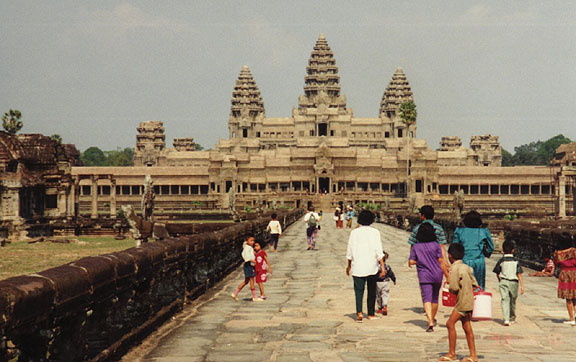
 Without doubt, the temples of Angkor Wat in Cambodia are among the most beautiful and evocative touristic sights in the world.Here are some helpful notes before visiting Angkor Wat.

Find cheap accommodation in Seamreap

Spending a couple of days in Siem Reap is highly recommended. The hostel beds start at U.S. $ 1 per night and hotel rooms from $ 4 for a double. Spending $ 10 per night, tourists can also find a superior hotel in the town center, or they can choose extra luxury with prices starting at$ 300 for a double room.

Means of transportation for Angkor Wat
The temples cover a vast area, so choosing one from of the following options:
Rent bycles from your hotels: The price of it ranges from US$ 1 to US$ 3 per day. Going around 30km of road, in a very humid and very hot climate, thus it is quite fun but requires effort and sweat to visit around the complex. Another option which helps you save your time better is motorcycle taxi (price from US$ 6 to US$ 10 per day). Tuk – tuks might be the best choice for tourists for groups of two persons. The local driver will be very helpful for you during your trip. With price US$ 10 to US$ 15 for whole day (driver included), you can travel to anywhere you want.  

Travel ticket

There are three types of tickets: daily, 3 days and weekly. Depending on the length of trip, the price is from US$ 20 to US$ 60. Therefore, tourists should bring small US$ for buying ticket faster and your ticket with the printed photo on it, easier. The ticket will allow the entry to the site from as early as 5 am (for seeing sunrise) to late after 6 pm (for seeing sunset), thus do not miss returning the temple for capturing wonderful moments of Angkor Wat

 Check your necessary luggage:
Imagine a day walking around the complex in humid conditions. Please ensure that you bring necessary luggage such as walking shoes, hat, sun glasses and water. Also, do not forget your camera with charged batteries.  
 
Related information

Angkor Wat tour
 

Thứ Sáu, 20 tháng 4, 2012

The complete Siem Reap experience

 It would appear that south-east Asia’s largest freshwater lake doesn’t know whether it’s coming or going.
The town this lake is accessed from — Siem Reap — is essentially famous for being the gateway to the temples of Angkor. But with more than three million people living on or around the lake in floating villages, the Tonlé Sap is a stand-out attraction in its own right. The lake is home to many ethnic Vietnamese who have emigrated to Cambodia over the past 50 to 100 years. Despite some tensions between this minority group and the local Cambodians, it’s a popular tourist stop off.

Cruising along in an old wooden boat with an equally ageing motor, I observed the locals going about their daily lives in their simple shacks, constructed from bamboo and sitting on mostly submerged stilts. Women sat on the front veranda mending fish nets; men worked on their boats and children played happily nearby.

I found this sobering reality something of a contrast with the sprawling opulence of Angkor Wat, which I visited one morning. Around 6am I found myself sitting on a rock in front of this magnificent edifice, its silhouette etched against the inky blue sky. As the sun scaled the horizon the intricate designs of this temple, once the centre of the Khmer civilization, came into full view.
A Hindu temple, Angkor Wat is regarded as the supreme masterpiece of Khmer architecture, with its elaborate bas-relief carvings illustrating scenes such as heaven and hell and the creation of the earth.
When in Siem Reap, it’s pretty much a fait accomplish that you will get ‘templed out’, but the good news is there are lots to choose from. The temples of Angkor, which are spread out some 65km around Siem Reap, were constructed between the eighth and thirteenth centuries.

 The temples are classified according to different styles, depending on when they were built. The styles are compared with one another according to aspects including the use of materials, the style of pillar, the pediments (at the front of the temple) and the lintel (the block of stones between the pediments and the pillar).
One of the most captivating is the small, pink-hued Banteay Srei, a 10th century sandstone Hindu temple. Another standout is Angkor Thom, the last and most enduring capital city of the Angkorian empire. Each of its grand gates features four giant smiling faces.
A great deal of restoration work has been done and continues to be done on many of the temples around Siem Reap, initially led by the French and later taken on by international agency UNESCO.
Siem Reap has evolved dramatically since the early 1900s, when the French rediscovered the city of Angkor after it had lain abandoned for centuries. Those planning a visit to this northern Cambodian town may be surprised to learn that it’s a pretty cosmopolitan place when it comes to wining and dining. The aptly named Bar Street is where many of these outfits are located. There are also a number of more socially conscious places to dine and shop, the profits from which are put back into local education and health.

When staying in Siem Reap, the night markets are a definite must-visit. Tourists spent a good few hours here, even opting for a fish massage, which involved dangling my feet in a spa while small fish nibbled away at my dead skin cells. It’s not for everyone, but every trip should include a few spontaneous experiences. Adventure travel, whether it’s extreme or soft, is in the end about having new and exciting experiences. For almost tourists, the town of Siem Reap provided that in spades. 

Source: travelweekly 

Related information: 


Thứ Hai, 16 tháng 4, 2012

5 things you need to know before travelling to Sapa

Sapa, Vietnam  is not only famed for its mountains sceneries but also the hamlets of colorful ethnic minorities. In 2011, Sapa has been recommended ten best tourist sites for walkers by the reputed magazine Lonely Planet. Here are some useful notes for you before a Sapa tour.  

Sapa terraced field

 Best time to go:

 The best time to visit Sapa is from April to September though; each season has its own special qualities and surprises. In this period, you may have a great opportunity to see plum flower and stunning terraced fields. It is dry with the temperature is ranging from 15 – 25 Degree Celsiu. During the winter months, the temperature is much cooler and it is advised to bring a some warm clothing. Also, during the winter months there are periods of light rain, which brings in the fog or snow. This puts Sapa in the clouds and allows for some fantastic photos. Perhaps more and more tourists travel to Sapa during the winter because of its special weather. If you want to escape from the touristy hassle, winter is not an ideal period for you.

Package Preparation:
A light suitcase is recommended during travelling to Sapa. Making sure that you have packed everything you need to make your stay more comfortable is most important. Bring a small bag with the clothes change of clothes. You should bring something warm, as the nights will cool off, sometimes dropping as much as ten degrees. Other things you might want to bring with you are a mirror, toilet paper, your favorite tea or snack, flashlight and raincoat. 

Train to Sapa


Transportation:
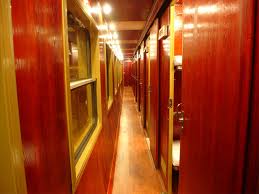
It takes around 8 hours from Hanoi to Lao Cai. You may choose two ways: travelling by coach or train to Lao Cai then, take a bus to Sapa. It depends on your budget to choose the suitable way for you. By coach, the price is around US15.  It is ranging from US$ 20 to US$ 30 for a soft berth on a night train SP. There is also available cheap price on LC train but it is quite slower.

Attractions:
Most of Sapa attractions are not far from Sapa Center. You should prepare a small map of destinations in there such as Hamrong Mountain, Ta Van village, Taphin village, Bac Ha market. You can eventually travel by yourself but I recommend you book a Sapa tour by a good travel agent who will trek with you to visit minority villages. Staying overnight at home stay with Hmong or Dao people will be a valued experience for anyone who first travels to Sapa.  People here always warm welcome their guests. If you are a kind of adventure traveler, why do not choose a package tour to conquer of Fansipan Mountain which is considered as the roof of Indochina.   

At Bac Ha market

Cuisine:
Exotic food in Sapa is known as San Lung alcohol, wild life pork, stream fish and some special vegetables such as chayote, cauliflower. Although they can find these vegetables in other province of Vietnam but only Sapa serve you the best dishes with reasonable price.  It is very exciting for walking with your partner in a romantic Sapa night and enjoy special food.